
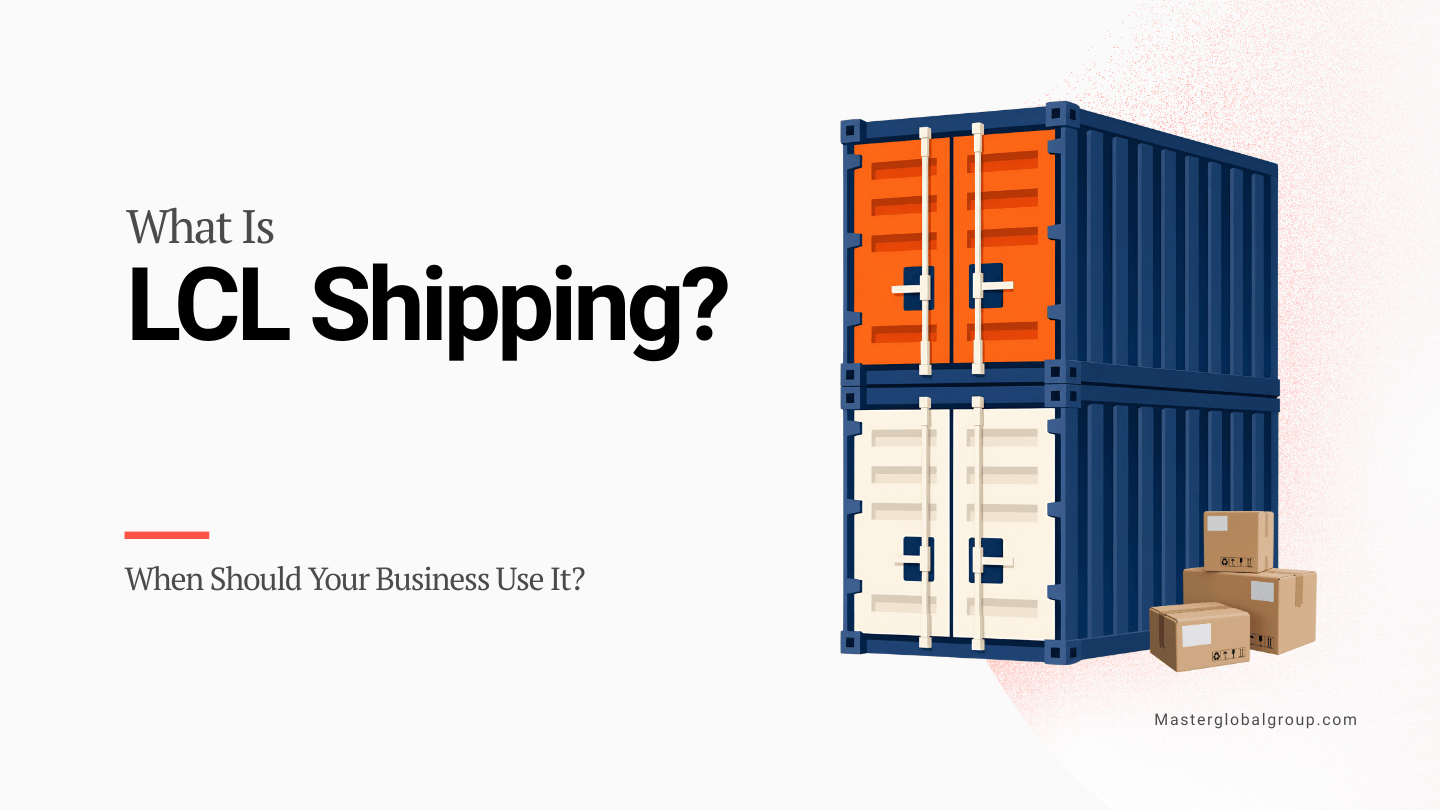
What Is LCL Shipping and When Should Your Business Use It?
When a business needs to ship goods internationally but does not have enough cargo to fill an entire container, LCL shipping can be a practical and cost-effective solution. LCL, or Less than Container Load, allows multiple shipments from different customers to share space inside the same shipping container.
For importers, exporters, retailers, manufacturers, distributors, and growing businesses, LCL freight can provide access to international sea freight without the expense of booking a full container.
But when should you choose LCL shipping instead of FCL, air freight, or another transportation option?
In this guide, we explain what LCL shipping is, how it works, when businesses should use it, how LCL freight is priced, and what to consider before booking an LCL shipment.
What Is LCL Shipping?
LCL shipping (Less than Container Load) is a method of transporting cargo by sea when a shipment does not require an entire container.
Instead of paying for and using a full container, your cargo is consolidated with shipments belonging to other customers. The available container space is shared according to the volume of each shipment.
For example, if your business has 5 CBM of cargo but a standard container has significantly more available capacity, booking an entire FCL container may not be economical. With LCL, your 5 CBM shipment can travel as part of a consolidated container.
This makes LCL particularly useful for businesses that:
- Ship smaller quantities
- Import products regularly
- Are testing a new market
- Do not have enough cargo for a full container
- Need a more economical alternative to air freight
- Source products from multiple suppliers
- Export goods to international markets
How Does LCL Shipping Work?
Although the process can vary depending on the origin, destination, carrier, and freight forwarder, a typical LCL shipment follows several stages.
1. Cargo Booking
The shipper provides information about the cargo, including:
- Product description
- Number of packages
- Dimensions
- Gross weight
- Cargo volume
- Origin
- Destination
- Required shipping date
The freight forwarder then determines the appropriate LCL service and consolidation option.
2. Cargo Collection or Delivery
The cargo is either collected from the supplier or delivered to the designated consolidation warehouse.
For businesses sourcing products internationally, this can be especially useful when cargo comes from multiple suppliers.
3. Cargo Consolidation
Shipments from different customers are consolidated into a container at the origin warehouse or CFS (Container Freight Station).
Your cargo occupies only the space required for your shipment.
4. Export Documentation and Customs
The necessary export documentation and customs procedures are completed before the consolidated shipment moves to the port.
5. Ocean Transportation
The consolidated container is loaded onto the vessel and transported to the destination port.
6. Destination Deconsolidation
After arrival, the container is taken to the destination CFS, where individual shipments are separated.
7. Customs Clearance and Delivery
The consignee completes the required import procedures, after which the cargo can be collected or delivered to its final destination, depending on the agreed service.
This is why choosing an experienced LCL freight forwarding partner can make a significant difference. A freight forwarder can coordinate documentation, consolidation, transportation, customs processes, and delivery across the shipment journey.
LCL vs FCL: Which Is Better for Your Business?
One of the most common questions businesses ask is whether they should choose LCL or FCL shipping.
LCL Shipping
LCL is generally suitable when:
- Your cargo volume is relatively small
- You do not need an entire container
- You want to avoid paying for unused container space
- You ship smaller or irregular consignments
- You are entering a new international market
FCL Shipping
FCL, or Full Container Load, means that your business books an entire container for its shipment.
FCL can be more suitable when:
- Your cargo volume is large
- You have enough goods to efficiently use a container
- You need exclusive container space
- Cargo security or handling requirements make consolidation unsuitable
- You require greater control over the container
The right choice depends on cargo volume, shipping frequency, destination, cost, handling requirements, and delivery requirements.
LCL vs Air Freight
LCL is also frequently compared with air freight.
Air freight is generally faster, making it suitable for urgent shipments, time-sensitive goods, high-value products, or situations where delivery speed is a priority.
LCL sea freight is generally more suitable for businesses that can accommodate longer transit times and want an economical method for transporting larger or heavier commercial shipments.
For example, a business importing regular inventory that is not urgently required may find LCL more appropriate than air freight.
On the other hand, a company waiting for an urgently required replacement component may prioritize air freight.
The decision should therefore be based on more than price alone. Transit time, cargo type, shipment volume, urgency, and destination all matter.
When Should Your Business Use LCL Shipping?
LCL can be an excellent choice in several business situations.
1. You Have a Small Shipment
If your cargo does not justify booking an entire container, LCL allows you to access ocean freight while using only the space your shipment requires.
This can be particularly useful for SMEs and businesses with smaller inventory requirements.
2. You Are Testing a New Market
Businesses entering a new country may not initially want to import large quantities of inventory.
LCL allows them to move smaller consignments while evaluating market demand.
Once demand increases, the business may eventually transition to FCL shipments.
3. You Import Products Regularly
A business does not necessarily need one large shipment every few months.
Regular smaller shipments can sometimes provide better inventory flexibility.
Instead of waiting until enough stock is available to fill a container, businesses can use scheduled LCL services to replenish inventory according to their requirements.
4. You Are Sourcing From Multiple Suppliers
International buyers frequently purchase products from several suppliers.
Instead of arranging separate shipments for every supplier, cargo can potentially be consolidated at an origin warehouse before being shipped together.
This can simplify logistics and reduce unnecessary transportation arrangements.
5. You Want an Alternative to Air Freight
If your shipment is not urgent, LCL can provide an alternative to air cargo.
Businesses that can plan their inventory in advance may benefit from moving suitable cargo by sea rather than paying the premium associated with faster transportation.
6. You Need Flexible Inventory Management
LCL can support businesses that prefer smaller and more frequent shipments.
This can help reduce the need to purchase excessive inventory simply to fill a container.
What Is CBM in LCL Shipping?
One of the most important measurements in LCL freight is CBM, which stands for Cubic Meter.
LCL charges are commonly influenced by the volume and/or weight of the cargo, depending on the shipment and applicable freight terms.
To calculate the volume of a rectangular package:
CBM = Length × Width × Height
When dimensions are provided in centimeters:
CBM = Length × Width × Height ÷ 1,000,000
For example, if one package measures:
100 cm × 80 cm × 50 cm
The volume is:
100 × 80 × 50 ÷ 1,000,000 = 0.40 CBM
If you have 10 identical packages:
0.40 × 10 = 4 CBM
Accurate dimensions are important because incorrect measurements can result in inaccurate freight quotations.
What Documents Are Required for LCL Shipping?
The exact documentation depends on the origin, destination, cargo type, and applicable regulations.
Common commercial shipping documents can include:
- Commercial invoice
- Packing list
- Bill of lading
- Certificate of origin, where required
- Export documentation
- Import documentation
- Product-specific certificates or permits, where applicable
Certain products may require additional documentation or special handling.
For this reason, businesses should confirm documentation requirements with their freight forwarder and customs clearance provider before shipping.
What Types of Cargo Can Be Shipped by LCL?
LCL is commonly used for a wide range of commercial cargo, subject to carrier acceptance, destination regulations, and cargo restrictions.
Examples can include:
- Consumer goods
- FMCG products
- Retail products
- Electronics
- Machinery and equipment
- Spare parts
- Construction materials
- Furniture
- Industrial components
- Packaging materials
- General merchandise
Certain cargo, including dangerous goods, temperature-sensitive products, oversized cargo, or other specialized shipments, may require specific arrangements.
Always confirm the cargo requirements before booking an LCL shipment.
How Can Businesses Reduce LCL Shipping Costs?
Choosing LCL does not automatically mean the shipment will be inexpensive. Freight rates can vary based on origin, destination, cargo volume, weight, season, carrier, handling requirements, and other charges.
Businesses can improve cost efficiency by:
Consolidating Supplier Shipments
If you purchase from multiple suppliers in the same origin market, consolidating compatible shipments can simplify transportation and potentially reduce duplicated logistics costs.
Improving Packaging
Efficient packaging can reduce unnecessary volume and help maximize the usable space allocated to your shipment.
Planning Shipments in Advance
Last-minute shipping decisions can reduce available options. Advance planning gives businesses more opportunity to compare schedules and freight solutions.
Choosing the Appropriate Freight Mode
For non-urgent commercial cargo, comparing LCL with air freight can help identify the most appropriate balance between cost and transit time.
Working With an Experienced Freight Forwarder
A freight forwarder can help compare routing, consolidation, documentation, handling, and delivery options based on your shipment requirements.
Is LCL Shipping Suitable for Small Businesses?
Yes. LCL can be particularly useful for small and medium-sized businesses that do not regularly have enough cargo to fill a container.
For a growing importer, committing to a full container may not always make sense.
LCL provides an opportunity to start with smaller commercial shipments and increase shipment volume as the business grows.
This can be especially valuable for:
- New importers
- Small retailers
- E-commerce businesses
- Distributors
- Startups
- Businesses testing new products
- Companies expanding into new countries
LCL Shipping From Dubai to International Markets
Dubai is an important commercial and logistics hub connecting businesses across the Middle East, Africa, Asia, Europe, and international markets.
For businesses sourcing goods in the UAE or using Dubai as a consolidation point, LCL can provide an efficient way to move smaller commercial shipments internationally.
Masterglobal provides logistics solutions connecting Dubai with selected international markets through LCL, FCL, air freight, road freight, customs clearance, warehousing, and other supply-chain services.
Our Direct LCL services are particularly focused on selected African and Indian Ocean destinations, helping businesses move commercial cargo without necessarily requiring a full container.
Why Choose Direct LCL Shipping?
Not all LCL services follow the same routing.
Depending on the destination and available service, cargo may move through different ports or transshipment points.
A direct LCL service can provide a more streamlined route where a direct service is available.
For businesses shipping regularly, factors such as:
- Transit time
- Sailing frequency
- Origin consolidation
- Destination handling
- Documentation
- Customs
- Final delivery
- Shipment tracking
can all be important when choosing an LCL logistics provider.
LCL Shipping From Dubai to Africa and Indian Ocean Markets
For businesses trading with African and Indian Ocean markets, selecting the right logistics partner is particularly important.
Masterglobal’s Direct LCL network includes destinations such as:
These routes can be relevant for importers, retailers, distributors, FMCG businesses, construction companies, manufacturers, and other commercial organizations.
The most suitable shipping solution will depend on the cargo, origin, destination, volume, required delivery time, and specific service requirements.
How to Choose the Right LCL Freight Forwarder
Before selecting an LCL provider, businesses should look beyond the quoted ocean freight rate.
Consider:
Route Coverage
Does the freight forwarder regularly handle your origin and destination?
Consolidation Capability
Can they consolidate cargo efficiently and securely?
Documentation Support
Can they assist with the required shipping and customs documentation?
Destination Handling
Does the service include reliable destination coordination?
Customs Clearance
Can they support import clearance where required?
Warehousing
Can your cargo be stored, consolidated, or processed before shipment?
Shipment Visibility
Can you track the progress of your cargo?
Experience With Your Cargo
Does the provider understand the specific requirements of your products?
A lower freight rate is not necessarily the lowest total logistics cost. Reliability, handling, documentation, transit time, destination charges, and service quality should all be considered.
Final Thoughts: When Is LCL the Right Choice?
LCL shipping is most useful when your business needs to move commercial cargo internationally without filling an entire container.
It can be a practical solution when you:
- Have a smaller shipment
- Are entering a new market
- Import from multiple suppliers
- Need regular inventory replenishment
- Want an alternative to air freight
- Prefer not to pay for unused container capacity
- Need flexible international shipping options
The best shipping method ultimately depends on your cargo volume, destination, urgency, product type, budget, and supply-chain requirements.
If you are shipping commercial cargo from Dubai to Africa or Indian Ocean destinations, an experienced freight forwarding partner can help you determine whether LCL, FCL, air freight, or a combination of logistics services is the right solution for your business.
Looking for an LCL shipping solution from Dubai? Contact Masterglobal to discuss your cargo requirements, destination, volume, and preferred shipping schedule.
One Comment